Position Statement on Lifting the Ban on Hunting of Red List Species in Georgia
19 January 2012
With the recent changes to the legislation the ban on Red List species
hunting in Georgia has been lifted allowing shooting of even those species that
were originally driven to the verge of extinction due to excessive hunting.
Since the establishment of the current national red list in 2006, the
Georgian government has failed to meet the requirements of the international as
well as national legislation:
Position Statement on The hunting quotas published by the Georgian Ministry of Energy and Natural Resources
19 January 2012
On 10th January 2012 the Georgian Ministry of Energy and Natural Resources
published the following annual hunting quotas: Coypu – 194, Hare – 615, Badger –
168, Pine marten – 157, Stone marten – 157, Grey wolf – 120, Golden jackal –
1453, Red fox – 162, Wild cat – 77, Wild boar – 189, Roe deer 417, Racoon – 96,
Pheasant 416, Chukkar partridge – 713, Black francolin - 50.
On the purposed amendments to the hunting regulations and procedures
NACRES welcomes the wish of the Parliament of Georgia to improve the hunting
legislation. This initiative is viewed as a sign of the recognition of monetary
values of the wildlife, which may be expected to serve as a prerequisite of
increased control of illegal hunting in the country.
NACRES together with Fauna and Flora International (FFI) and WWF carries on
research on leopard and lynx study through photo traps. Our fieldworks cover the
territories of Vashlovani Protected Areas and Chachuna Managed Reserve. The main
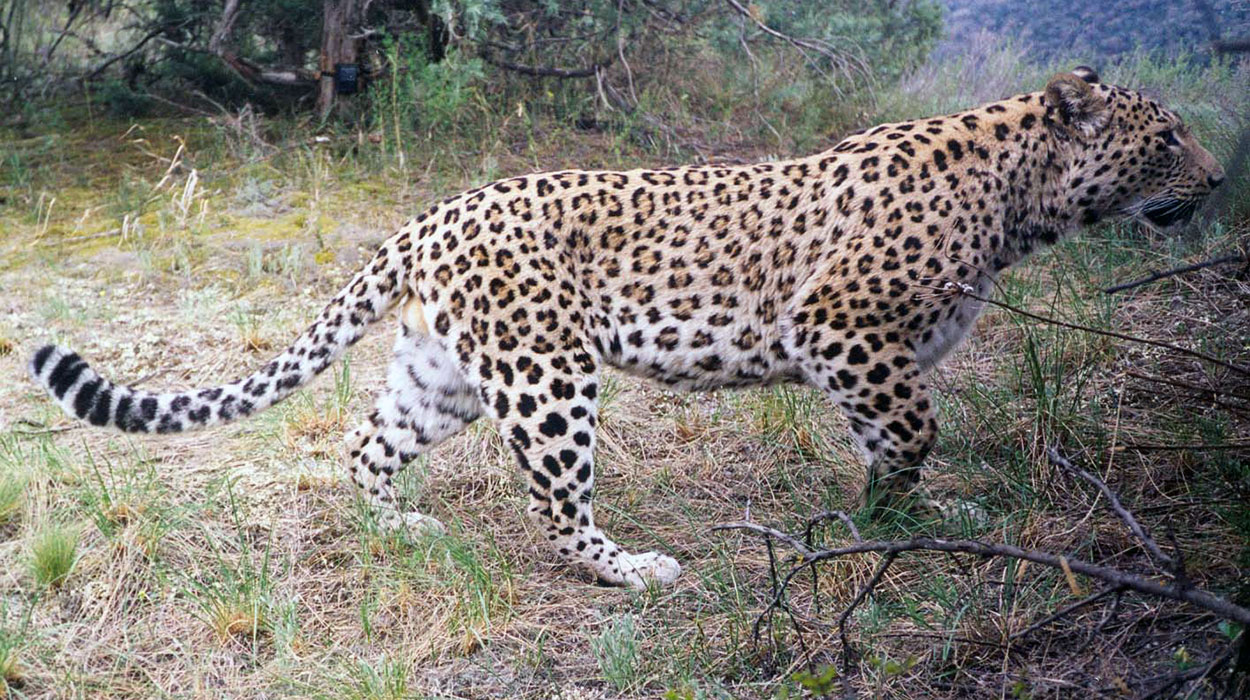
goal of the research is to shoot a new photo of leopard as well as to estimate
lynx population in semi-arid ecosystem. We fixed 50
photo traps on the territory in March and have already got first results.
NACRES together with WWF and the Agency of Protected Areas have launched a
joint initiative the aim of which is to discover the traces of leopard in Tusheti.
The field works started in July. We fixed 11 photo traps on the territory of Tusheti
National Park. Many large mammal species found in the park were captured on the
films of our remote sensing cameras. In September the results were as follows:
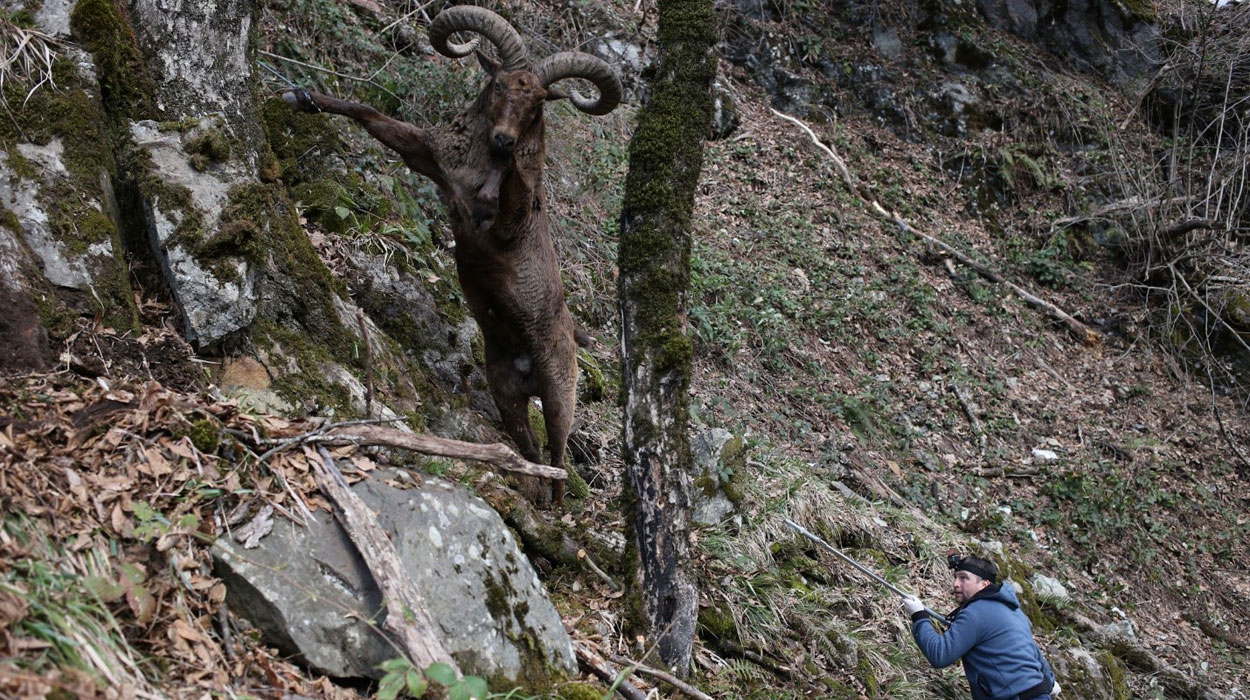
bezoar goat (75), wolf (15), brown bear (5), roe-deer (2), tur (3), and Caucasian
snowcock (10). Unfortunately no photos of leopard have been found on the
territory so far.
Currently NACRES carries out the analysis of the data collected during the
field trip. Monitoring of large mammals with remote sensing cameras continues
in Tusheti National Park.
This video serves as the first documentary evidence of porcupine population
living in Georgia. The video was taken in Vashlovani National
Park by NACRES remote sensing camera.
More
The project, "Eurasian Otter Research and Conservation in Georgia"
launched in 2004 is part of NACRES’ long-term study of the otter
population of the Alazani valley (East Georgia). This video was
taken in the wild by NACRES’ remote sensing camera. This is the
first video of otter in Georgia.
NACRES is a
non-governmental, not for profit organisation that was founded in 1989. Its
mission is to safeguard the biodiversity of Georgia and the South Caucasus,
through conservation activities at national and local levels, based on sound
science, sustainability principles and local participation.
Testing site-level revenue generation mechanisms in Tusheti Pas (Consultancy contract under the UNDP/GEF project
"Catalyzing Financial Sustainability of Georgia’s Protected Areas System")
Development of Emerald Network in Georgia - Emerald Joint Programme for EU Neighbourhood Policy East Area and Russia