
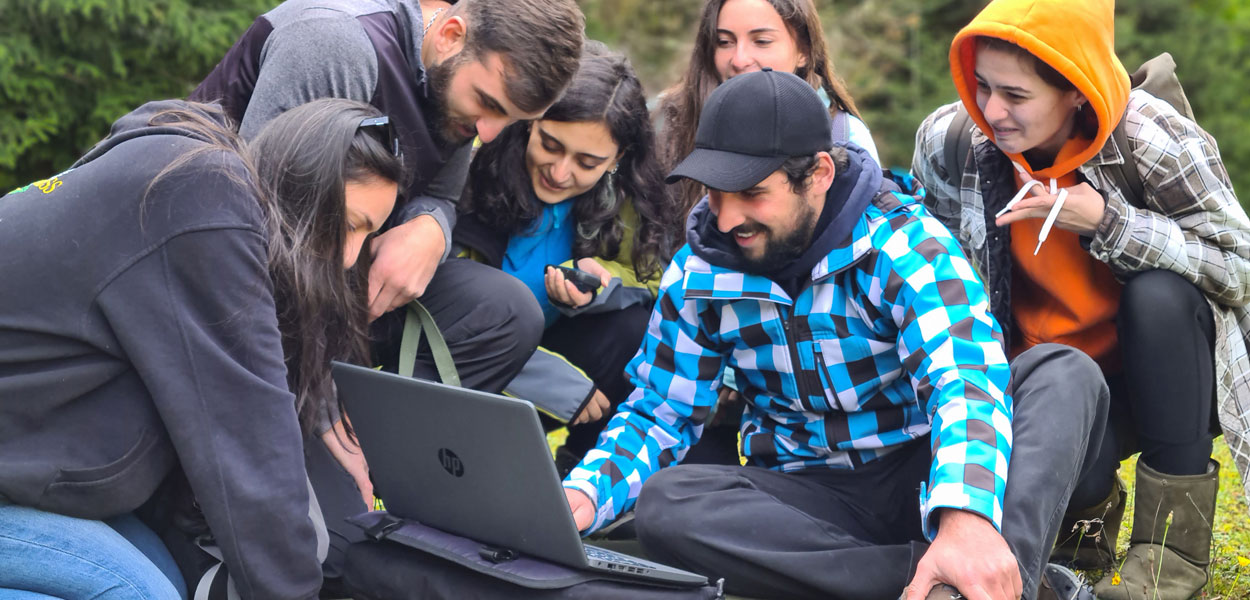
NACRES’s Community Ranger program is focused on increasing community participation in biodiversity monitoring of Georgia's Protected Areas. The program trains its participants to assist with wildlife monitoring through a brief training program, which prepares them to do fieldwork in Protected Areas. After the training is completed, participants spend almost a year working under the supervision of NACRES’ coordinators, during which time they set up and monitor camera traps, map out key species sightings and location, and engage in community outreach.
The program is dedicated to improving the knowledge of local communities regarding protected areas and the wildlife within them, as community involvement is an essential part of effective PA management. Community Rangers distribute information, explain the benefits of conservation and the importance of biodiversity and healthy ecosystems.

The training typically lasts several days and covers animal track identification, camera trap operation, GPS and map reading, and specialized training on the Protected Area that the Community Rangers will be working in. There is also education about the PA system in Georgia as well as standard international conventions and practices in nature conservation.
Initiated in 2020, the program has since trained 43 Community Rangers. The first group of rangers were trained at Borjomi-Kharagauli National Park; since then Community Rangers have been trained at Erusheti National Park, Javakheti and Ajara Protected Areas, with assistance and collaboration with the local NGO Green Borjomi. In 2023, we have the fourth training phase and the focus is on Tusheti and Pshav-Khevsureti National Parks, where our Community Rangers have a special mission – to help NACRES’ Conservation Research Team with the ongoing search and monitoring for the Caucasus leopard.

Project status: Active
Project location: Borjomi, Adjara, Tusheti, Khevsureti
Project Coordinator/Team: Natia Muladze,
Donors/Partners: The Europe Foundation, the U.S. Embassy in Tbilisi, Caucasus Nature Fund (CNF).