
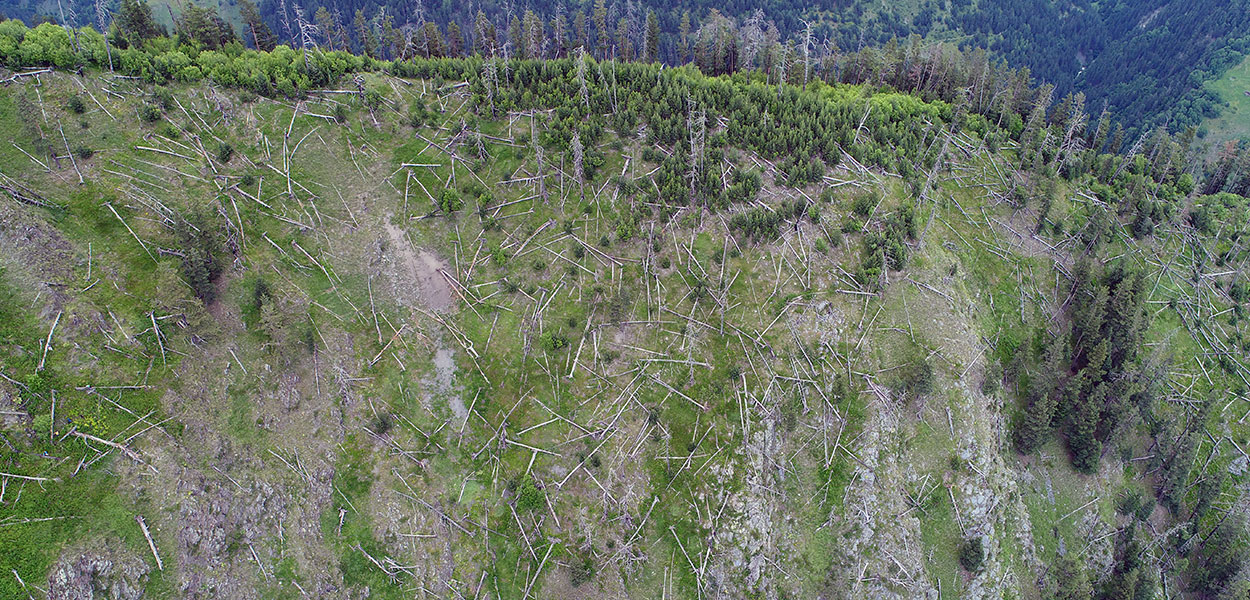
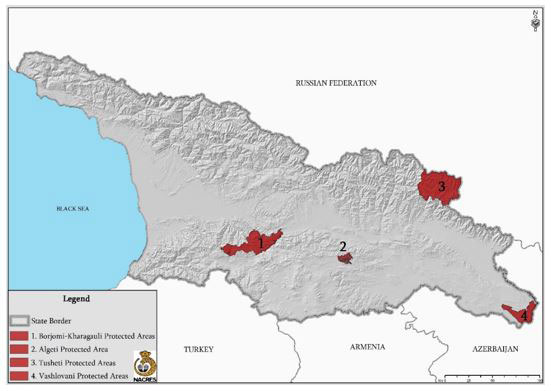
Forest fires are becoming a larger and larger risk within Georgian forests, increasing from an average of 10 per year in 2012 to over 60 per year in 2022. To combat this threat and mitigate the effects of future wildfires, Sophie Gogibedashvili and Dr. Kakha Artsivadze have established this project with the intention of mapping risk areas in Georgia—the first endeavor of its kind in the country. Beginning in 2021, the program heads piloted their work in Borjomi National Park and, as of this year, have expanded their mapping efforts to Algeti National Park, Vashlovani Protected Area, and Tusheti Protected Area. Sophie and her team hope to have these three areas mapped by 2025.
The goal is to create a forest fire risk model which would provide all of the necessary information needed to make critical decisions regarding future wildfires. The team is identifying sources of fire fuel (fallen branches, leaf litter, tree needles) and its density in each region, as well as gathering information on the availability of access roads, human settlements, and habitats of interest in the region, all of which must be taken into account when deciding how to combat a forest fire.

Once completed, the risk map model can be used to help with management planning, showing what risks are present in each area. It can be used to plan logging and planting activities, monitor fire risks, determine where a potential fire would spread and how severe it may be. It can also provide insight into high-risk areas with low accessibility and determine which regions require measures to be put in place which would give firefighters easier access in case of an emergency, e.g. roads, water reservoirs, and fuel removal.
There are many challenges present in this project, primarily in the lack of previous data to consult. The NACRES team spearheading this project are the first to attempt such an endeavor in Georgia, and as such much of the data must be collected by the team before being evaluated and put into a working model. Volunteers are a large part of the success of this project, most of whom are forestry students from the Agricultural University of Georgia. Despite the challenges, Sophie, Kakha and the rest of their crew are making strong headway in the mitigation and prevention of fires in Georgian forests.
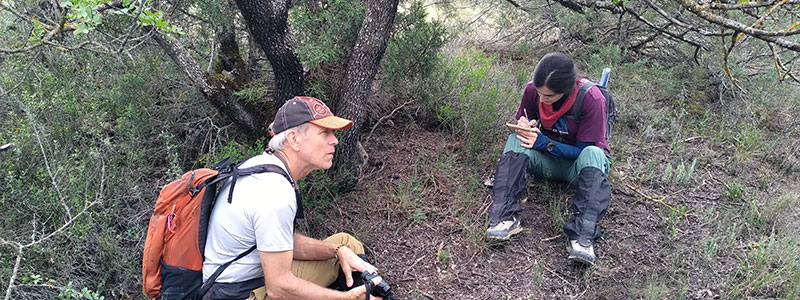
The U.S. Forest Service has been a major collaborator in this project, providing the yearly funding needed to continue the project as well as necessary expertise and training. The basis of the techniques used by Sophie Gogibedashvili are US–based protocols and approaches, which have then been adapted to the unique needs of Georgia’s forests. In particular, the expertise of American forestry expert Dr. Hugh Safford of University of California, Davis, has been an essential part of this program’s success by providing support and expertise to this groundbreaking project.
Project status: Active
Project location: Borjomi-Kharaguli National Park, Vashlovani National Park, Algeti National Park, Tusheti
Project Coordinator/Team: Dr. Kakha Artsivadze, Sophie Gogibedashvili
Donors/Partners: U.S. Forest Service